Ever wondered how to view animations in Roblox Studio, ensuring your game characters move fluidly and realistically? This comprehensive guide breaks down the essential steps for every creator. We'll cover everything from using the Animation Editor to previewing animations directly within your game environment. Understanding these processes is crucial for developing engaging experiences that captivate players across the Roblox platform. Whether you're debugging a complex character rig or simply want to admire your latest creation, mastering animation playback is a fundamental skill. This resource will provide clear, actionable insights, helping you navigate the tools and best practices for animation viewing effectively. Get ready to elevate your Roblox development game with polished, dynamic character movements that truly stand out.
Welcome to the ultimate living FAQ about viewing animations in Roblox Studio, updated for the latest patches and tools! Whether you're a fresh face just starting your animation journey or a seasoned developer troubleshooting a tricky rig, this guide is packed with insights to help you get those characters moving flawlessly. We know how crucial smooth, responsive animations are to building captivating experiences on Roblox, so let's dive into all the common questions and get you animated!
Beginner Questions
What is the easiest way to view my animation in Roblox Studio?
The easiest way is using the built-in Animation Editor. Open it from the Plugins tab, select your character rig, then create or load an animation. You'll find a play button on the timeline; just click it to instantly preview your animation in the editor's viewport. It's super handy for quick checks!
Why isn't my animation playing in the Animation Editor?
This one used to trip me up too! Usually, it's because you haven't selected a valid rig. Make sure your character model has a Humanoid and a proper R6 or R15 rig. If you're working with a custom rig, ensure it's set up correctly for animation. Also, check for any errors in the Output window that might point to a problem with the animation file itself.
Tips & Tricks
How can I make sure my animation looks good on all characters?
I get why this confuses so many people. To ensure broader compatibility, always animate on a standard R6 or R15 character rig. When you export, choose a generic name. Remember that slight variations in character proportions can affect how animations look, so test on a few different base models if possible to catch any weird stretching or clipping. You've got this!
What's the best way to debug animation issues in Roblox Studio?
Debugging animation issues usually starts by checking your Output window for errors or warnings. Often, a common issue is an incorrect AnimationId in your script, or the animation might be attempting to play on a Humanoid that's already busy. Use the 'Play Solo' mode to test, then pause and inspect the character's Humanoid object in the Explorer for active 'AnimationTracks' to see what's really happening. Try this tomorrow and let me know how it goes.
Bugs & Fixes
My animation plays in the editor but not in the game, what gives?
This is a classic head-scratcher! If it works in the editor, the animation itself is likely fine. The problem is usually with your script or how you're loading the animation in-game. Double-check your AnimationId for typos. Ensure the script is actually loading the animation onto the correct Humanoid and that no other script is overriding it with a higher priority animation. Sometimes, network lag can also cause slight delays in animation playback, so consider that too.
Why does my character just stand still when an animation should be playing?
Ah, the dreaded T-pose! This often happens if the animation asset isn't loading correctly or if the Humanoid can't find an animation to play. Make sure the Animation object exists in the game, and its AnimationId property is set to your exported ID. Also, verify that your script is calling :LoadAnimation() and :Play() on the Humanoid, and that the character object exists when the script tries to play it. Check your console for any error messages; they're your best friends here!
Endgame Grind
How do pro developers handle complex animation sequences?
Pro developers often use AnimationControllers and State Machines. An AnimationController allows multiple animations to play simultaneously and blend smoothly. State Machines, implemented through scripts, manage which animation plays based on the character's current actions (e.g., running, jumping, attacking). This modular approach makes complex sequences easier to manage and debug, leading to a much more polished final product. It's a game-changer once you get the hang of it!
Most Asked Questions about How to View Animations in Roblox Studio
What tools do I need to view animations in Roblox Studio?
You primarily need Roblox Studio itself, and within it, the Animation Editor plugin found under the 'Plugins' tab. This editor is your main interface for creating, modifying, and previewing animations. For in-game viewing, you'll also utilize scripts to load and play the animations on character models, interacting with the Humanoid or AnimationController.
How can I export my animation for in-game viewing?
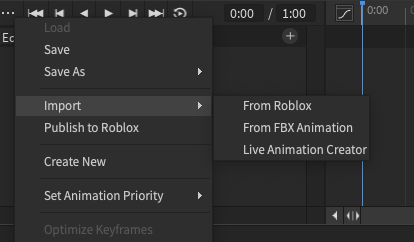
After creating your animation in the Animation Editor, locate the 'File' menu (often represented by three dots) within the editor window. Choose 'Save to Roblox' and give your animation a descriptive name. This action will provide you with a unique AnimationId. Copy this ID, as you'll need to paste it into an 'Animation' object in your game to play it via script.
Can I view animations on R6 and R15 characters differently?
Yes, R6 (6 body parts) and R15 (15 body parts) characters handle animations differently due to their distinct rigging structures. An animation made for an R6 character will generally not work correctly on an R15 character, and vice versa. It's crucial to animate and test your animations on the specific rig type you intend to use in your game to ensure proper playback.
Why is my animation appearing stretched or distorted in-game?
Stretching or distortion usually indicates a mismatch between the rig the animation was created on and the rig it's being played on. Ensure your character model in the game matches the exact rig (R6/R15 and even specific custom rigs) that you used in the Animation Editor. Inconsistent scaling of the character model can also cause visual issues during animation playback.
Is there a way to slow down or speed up animation playback for viewing?
Absolutely! When playing an animation through a script, you can control its speed using the `AnimationTrack.Speed` property. For instance, `animationTrack.Speed = 0.5` will play it at half speed, while `animationTrack.Speed = 2` will double its speed. This is incredibly useful for analyzing subtle movements or quickly checking timing during development. In the Animation Editor, you might have limited speed control but the in-game script offers full flexibility.
What is animation priority and how does it affect viewing?
Animation priority determines which animation takes precedence when multiple animations attempt to play on the same Humanoid simultaneously. Priorities range from 'Idle' (lowest) to 'Core' (highest). If a 'Movement' animation is playing, an 'Action' animation will typically override it. Understanding priority is key to ensuring your critical animations (like attacks or reactions) play as intended without being unexpectedly interrupted by lower-priority movements.
Still have questions? Check out our popular related guides on advanced rigging techniques or scripting complex character behaviors!
Hey there, fellow Roblox developers! Ever found yourself scratching your head asking, "How do I actually see the animations I've lovingly crafted right here in Roblox Studio?" You're not alone. It's a common question, and getting your characters to move just right is a cornerstone of any fantastic Roblox experience. Today, we're diving deep into viewing and refining your animations, making sure they pop!
Understanding how to properly view animations in Roblox Studio is more than just a convenience; it's a necessity for bringing your visions to life. From simple character idles to complex action sequences, seeing them in motion helps you catch tiny imperfections. This knowledge is crucial for creating polished and immersive games that truly stand out to players. We're going to explore all the ways you can preview and test your animated creations.
Getting Started with Roblox Animation Tutorial
So, where do you begin your Roblox animation tutorial journey? The good news is, Roblox Studio provides powerful, intuitive tools right at your fingertips. The **Animation Editor Roblox** is your primary playground for creating and, more importantly, viewing these dynamic movements. This essential tool allows you to manipulate character parts and record keyframes with precision. It's designed to be user-friendly, guiding you through the animation creation process step by step.
Why is understanding the Animation Editor so important? Because it's where the magic truly happens. You'll spend significant time here, crafting every subtle nuance of your **Roblox character animation**. Knowing its features intimately means you can iterate faster and achieve higher quality results. It's the central hub for all your animation-related tasks, from initial setup to final playback testing.
The Animation Editor Your First Stop
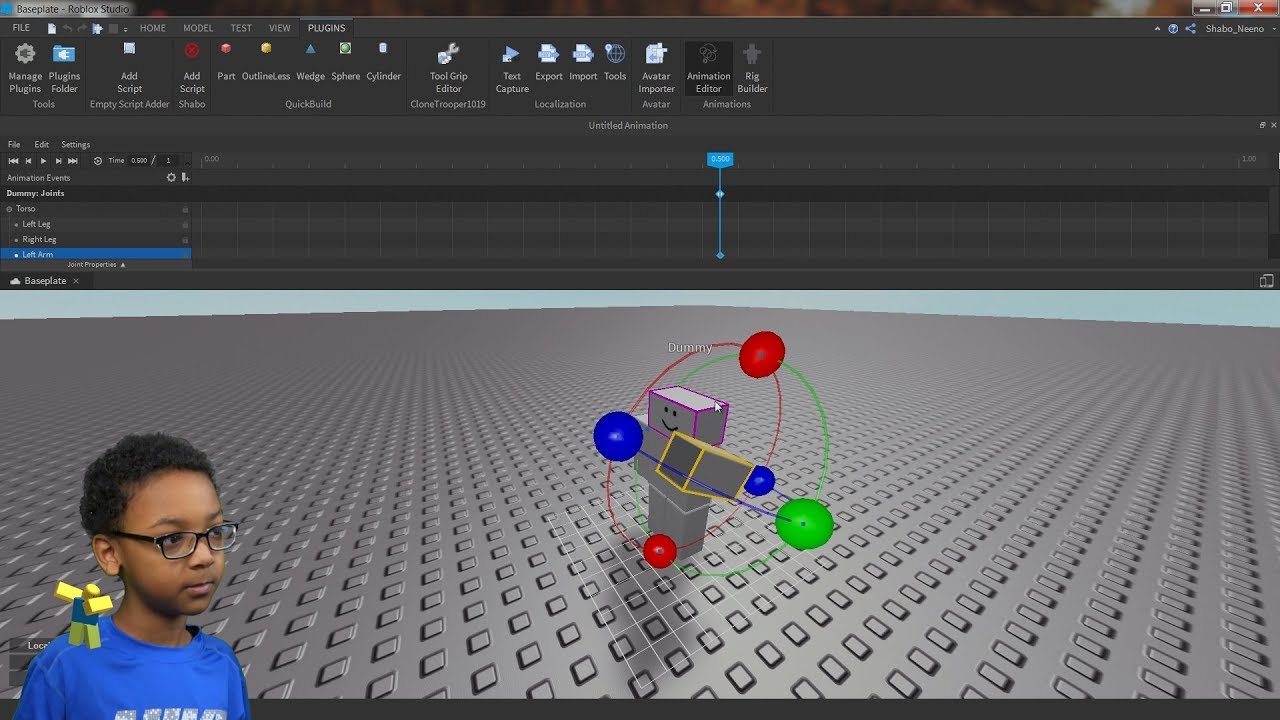
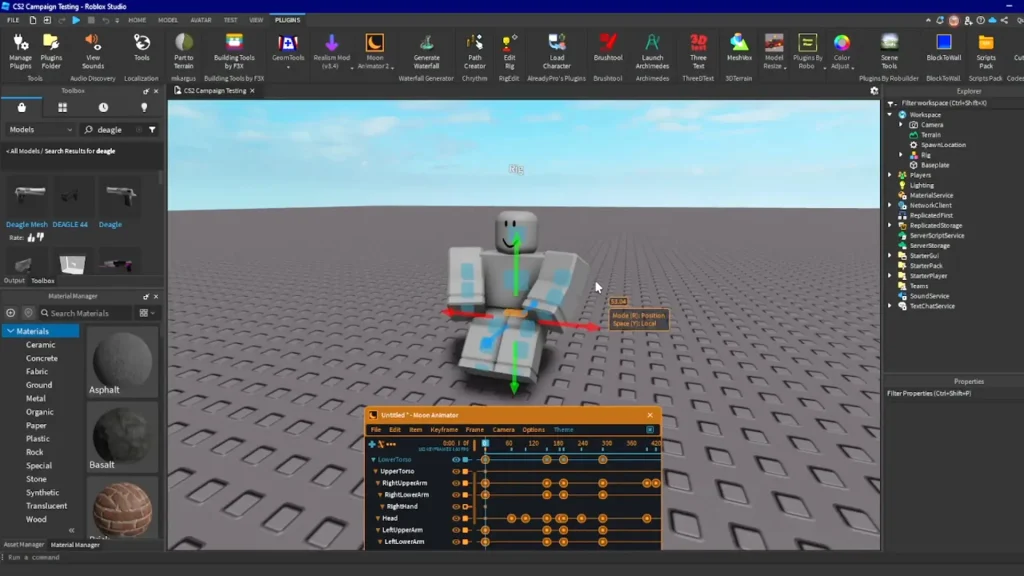
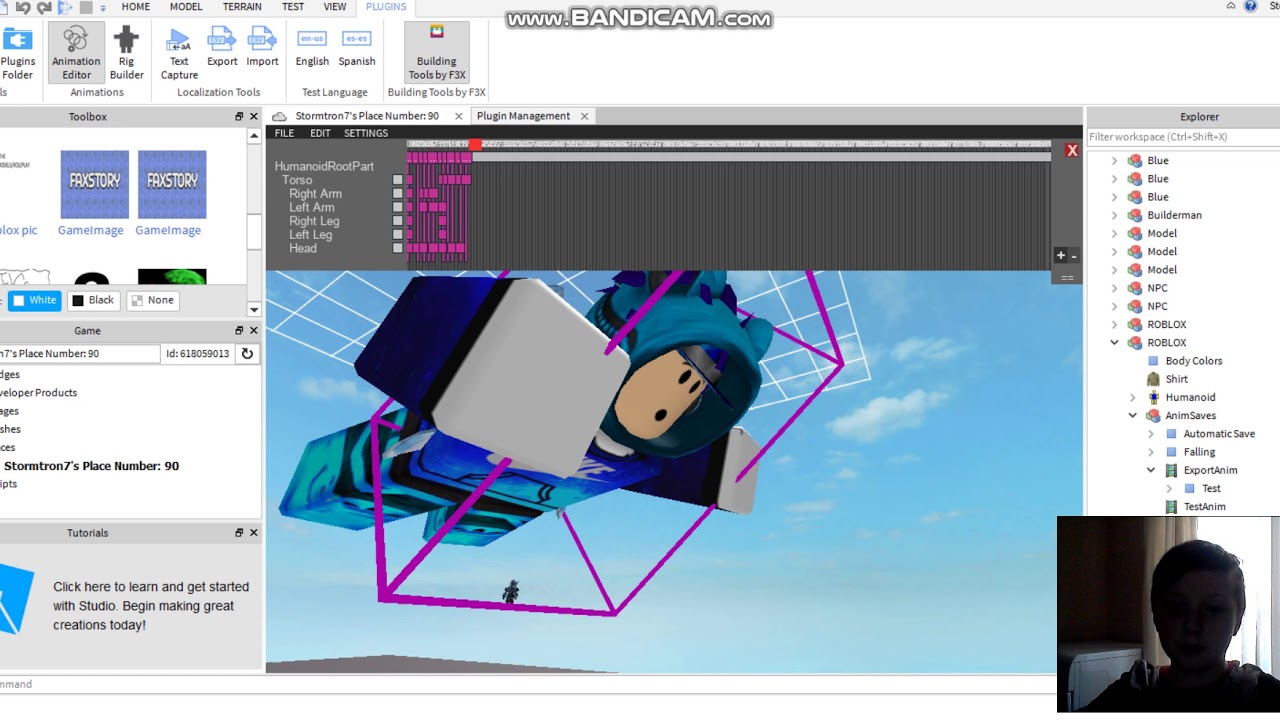
To access the Animation Editor, simply open your place in Roblox Studio and navigate to the Plugins tab. You'll find the "Animation Editor" button there. Click it, and a new window will appear, prompting you to select a rig. A rig is essentially your character model, ready to be animated. Once loaded, you'll see a timeline, a viewport, and various controls for posing. This is where you bring your static models to life.
Why is selecting the correct rig crucial for animation viewing? Because the animation is tied directly to that specific model's bone structure. If you animate a different rig, it might not play correctly on your intended character. Always double-check you've got the right model selected before you start animating or testing. This saves a lot of headaches later on in your development process.
Previewing Your Roblox Character Animation
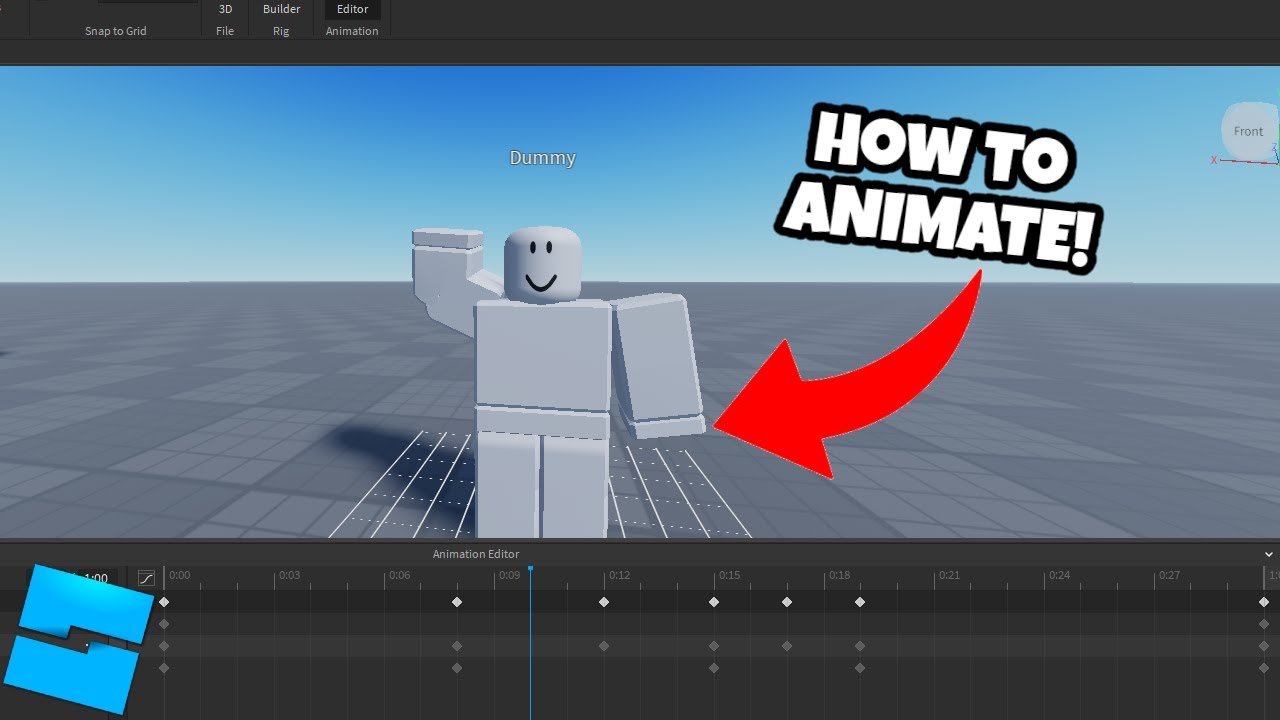
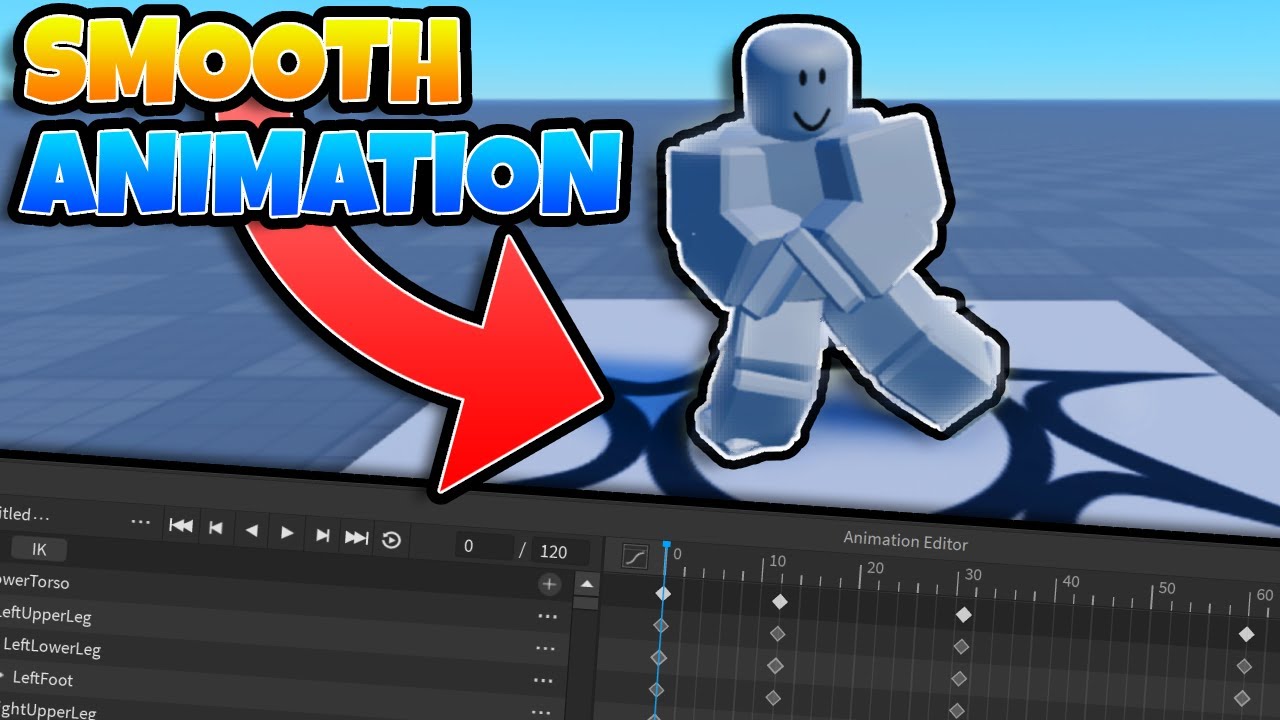
Once you've made some progress on your animation, you'll naturally want to preview it. The Animation Editor itself offers a built-in preview functionality. There's a play button located prominently on the timeline control bar. Clicking this button will immediately **play animation Roblox Studio** within the editor's viewport. This is your first line of defense against awkward movements or timing issues.
When you're trying to **play animation Roblox Studio**, pay close attention to how the character's limbs move. Look for any sudden jerks, clipping through other body parts, or unnatural transitions. The editor's preview is invaluable for these immediate adjustments. It allows for quick, on-the-fly corrections without needing to run your entire game. This iterative process speeds up development considerably.
Testing in a Live Game Environment
While the editor's preview is great, nothing beats seeing your animation in action within the actual game. This is where you can **Play animation Roblox Studio** in its intended context. To do this, you'll typically export your animation from the Animation Editor. It will give you an AnimationId, which is a unique asset ID for your creation. This ID is then used in a script to load and play the animation on your character or an NPC.
Why is testing in-game so important? Because it accounts for other game mechanics, physics, and network latency that the editor can't fully replicate. An animation might look perfect in isolation but behave strangely when combined with a player's movement script. Running a quick playtest lets you catch these subtle interactions. It ensures your animations feel natural and responsive to the player.
Dealing with Roblox Animation Issues
Sometimes, despite your best efforts, you might run into **Roblox animation issues**. Perhaps your animation isn't playing at all, or it looks glitchy. One common culprit is an incorrect AnimationId in your script. Always double-check that the ID you've pasted matches the one generated when you saved your animation. Typos are sneaky and can stop your animation dead in its tracks.
Another frequent issue involves the character's Humanoid. Animations are played through the Humanoid component of a character. If the Humanoid isn't properly set up or if the character isn't a valid R15 or R6 rig, animations may fail to load. Ensuring your character has a healthy Humanoid and a proper rig is fundamental. Debugging these **Roblox animation issues** often means looking at the Output window for error messages. These messages provide vital clues about what went wrong, guiding you toward a solution.
Troubleshooting Common Animation Problems
When an animation isn't behaving as expected, start by isolating the problem. Can you play the animation in the Animation Editor? If not, the issue might be with the animation itself or the rig. If it plays in the editor but not in-game, the problem is likely in your scripting or the way the animation is being loaded. Check for warnings in the Output window, as these often point directly to the source of the trouble. A common warning relates to the animation being 'stolen' if multiple scripts try to play animations on the same Humanoid at once.
Remember to consider the animation priority. Roblox animations have priorities (Idle, Movement, Action, Core). If a lower priority animation is trying to play over a higher priority one, it might be overridden. Adjusting the animation priority in the editor before saving can resolve conflicts. This is a subtle but powerful tool for managing complex character behaviors. Understanding these nuances helps you create seamless and predictable character movements, enhancing the player experience.
Advanced Animation Viewing Techniques
For more advanced users, understanding the animation object hierarchy is beneficial. When you save an animation, it becomes an 'Animation' asset in your Toolbox. When loaded into a script, it creates an 'AnimationTrack' object. You can inspect these AnimationTracks in the Explorer while your game is running. This allows you to see their status, speed, and whether they are actually playing.
Utilizing the command bar in Studio during a playtest can also be a game-changer. You can manually load and play animations on your character to test them quickly. For example, typing game.Players.LocalPlayer.Character.Humanoid:LoadAnimation(AnimationId):Play() can help diagnose issues on the fly. This method provides immediate feedback and helps pinpoint if a script is truly at fault. It's a quick and dirty way to confirm your AnimationId is valid and the animation itself is functional outside of your main game logic.
Quick Human-Friendly Cheat-Sheet for This Topic
- First, open the **Animation Editor Roblox** from the Plugins tab to start creating and previewing.
- Always select the correct character rig for your animation to ensure it looks right in game.
- Use the play button within the Animation Editor for instant feedback on your **Roblox character animation**.
- Export your animation to get an AnimationId, which you'll need for in-game playback.
- In-game testing is vital to see how your animations interact with game physics and other scripts.
- Check the Output window frequently for errors when facing **Roblox animation issues**.
- Remember animation priorities; a higher priority animation will often override a lower one.
Mastering the Animation Editor in Roblox Studio is crucial for all developers. Learning how to preview animations instantly within your game environment saves development time. Debugging animation issues quickly ensures a smoother player experience. Understanding character rigging and animation playback is fundamental for dynamic games. Optimizing animation workflows enhances overall game development efficiency. Discovering how to load and play animations through scripts adds interactive elements.
34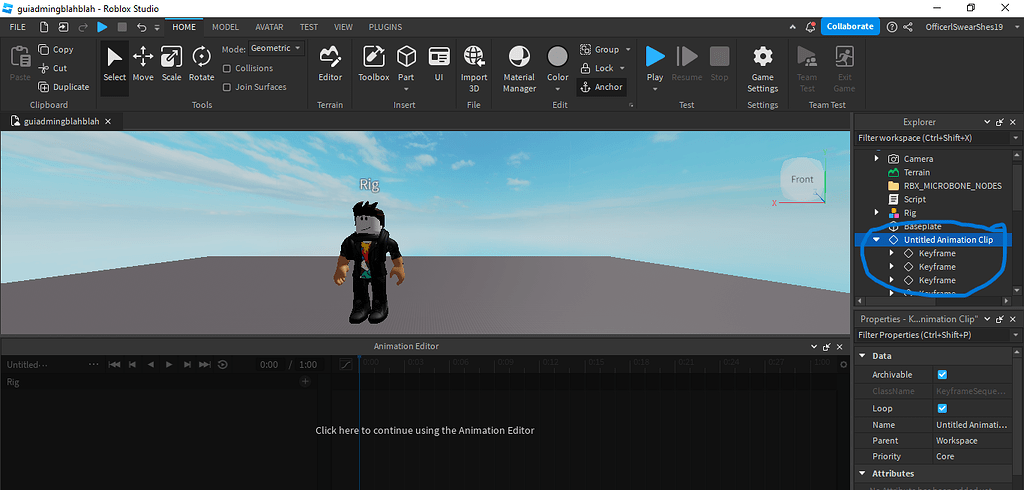


How Do I Get The Animationid Platform Usage Support Developer Forum 2 1024x490 . Animation In Roblox Studio H Ng D N T O V T I U Animation Cho Tr Ch I . How To Use Animations In Roblox Studio YouTube . How To Spoof Animations Roblox Studio YouTube . How To Use The Animation Editor In Roblox Studio YouTube


How To Make Your Own Animation Roblox Studio At Darlene Whitely Blog . How To Change Animations In Roblox Studio YouTube . Studio Animation Editor Now Supports Keyframe 2 1024x586 . Tutorial How To Create Custom Running Animations Roblox Studio Lite . How To Animate Models In Roblox Studio YouTube


How To Make Animations In Roblox Studio For Beginners A Quick User 282 Cover. How To Create The Falling Animation I Roblox Studio Tutorials YouTube . How To CREATE Animations AND UPLOAD Animations On ROBLOX STUDIO YouTube . Animating Two Rigs In Roblox Studio A Simple Guide 2 690x400 . HOW TO ADD CUSTOM ANIMATIONS TO ROBLOX STUDIO YouTube


HOW TO MAKE ANIMATION IN ROBLOX STUDIO WITH KEYCODE YouTube . How To Use Animation Editor Roblox Studio YouTube . Roblox Studio How To Make Easy Animations Animations YouTube Hqdefault . How To Make Animations Play In Game ROBLOX STUDIO TUTORIAL YouTube . How To Make Animations In Roblox Studio FULL TUTORIAL YouTube


How To Create Export And Play Animations On Roblox Studio YouTube . Roblox Studio Com EMSEKFLOL COM Roblox Studio Walkthrough Roblox Studio For Windows . Tutorial How To CREATE Custom R6 Animations IN Roblox Studio 3D Image 11 2048x1152 . How To Import Roblox Studio Animations To RetroStudio YouTube Hqdefault . Import And Configure Animations Roblox Creator Hub Animation Editor Import


ROBLOX STUDIO How To Spoof Animations YouTube . How Export Animations In Roblox Studio Make Animations In Roblox . How To Make Custom Player Animations In Roblox Studio YouTube . How To Make Animations In Roblox Studio YouTube . How To Make Animations In Roblox Studio YouTube


How To Add 2017 R15 Animations To Your Game Roblox Studio YouTube . HOW To Steal Animations From Models Or Get Animations From Models . How To Animate A Custom Model In Roblox Studio In 2019 YouTube . How To Use Custom Animations In Roblox Studio 2025 Step By Step